

6 Benefits of Learning Piano for Kids
Explore the benefits of learning piano for kids, from focus and coordination to confidence and creativity, and what parents can realistically expect from lessons.
November 1, 2026
Featured
Piano lessons can offer kids more than the ability to play their favourite songs. As children learn, they’re also practising how to listen closely, coordinate both hands, stay with something that feels difficult, and build confidence through progress.
If you’re weighing up whether piano isthe right fit for your child, it helps to know what these benefits actually look like in real life: what your child is doing at the keys, how piano helps build each skill, and what you might start to notice at home over time. That way, you’re deciding based on what piano can realistically add to your child’s learning journey, not just a general sense that “music is good for kids.” Here are 6 benefits for you to consider!
Key Takeaways
- Piano lessons build far more than musical skill: they give kids regular practice at focus, coordination, confidence and persistence.
- Every benefit develops gradually and looks different from child to child, so it’s best to expect steady progress rather than overnight results.
- Piano lessons can be worthwhile even if your child never plans to pursue music professionally.
- Structured lessons help kids build these skills at a comfortable, guided pace. Book a trial lesson to see how your child takes to it.
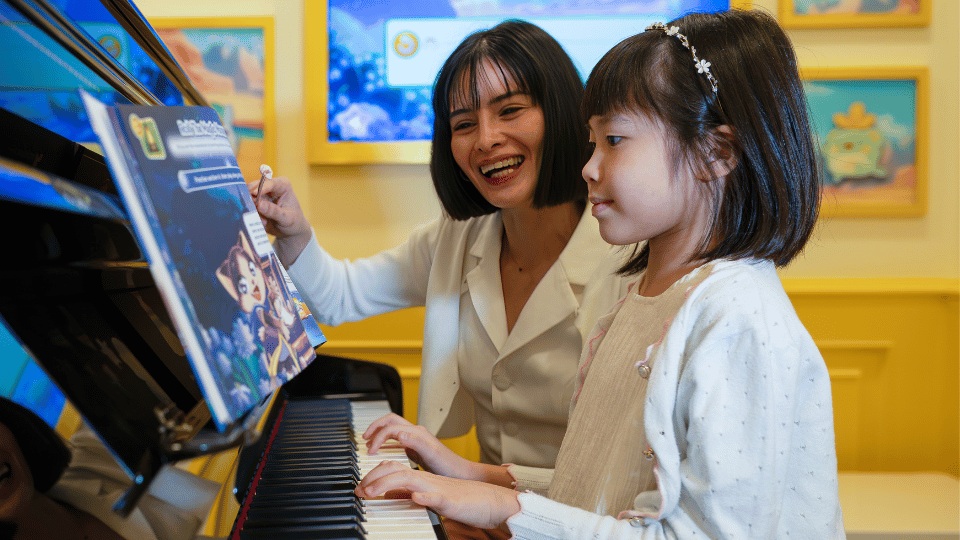
How Can Piano Lessons Support Your Child Beyond Music?
Learning piano involves much more than pressing the right keys. During a lesson, kids might be reading notes on a music sheet, listening to the rhythm, and coordinating both hands to play different notes at the same time. It takes focus, practice and patience to bring everything together. Over time, these small steps can help kids develop skills that support their learning beyond music. Here’s how each piano-specific skill can make a difference.
1. Focus and Concentration
Even a simple piece can ask a child to look at the music, listen to what they’re playing, keep the beat and move both hands at the right time, all at once. That’s a genuine workout for attention, and it happens in nearly every lesson.
It won’t turn every child into a laser-focused prodigy overnight (and we’re not going to promise it’ll fix homework time too), but it does give kids regular, low-stakes practice at staying with one task. For example, when kids practise a tricky passage, they may need to slow down, pay attention to the notes and try again until they can play it more smoothly. Parents may notice this growing willingness to work through a challenge during practice, even if the same level of focus doesn’t automatically carry over to other activities. If you’re curious how this connects to the bigger picture, it’s a theme we explore further in Music Makes You Smarter.
2. Coordination and Motor Skills
This is where piano gets to show off a bit. As children progress, the right and left hands may need to play different notes or rhythms at the same time, something that takes practice and coordination to master.
The keyboard’s layout also helps kids see where notes sit in relation to one another, while pressing a key produces an immediate sound they can listen to and adjust to. As they practise, kids learn to coordinate their finger movements with what they see and hear, gradually becoming more comfortable playing different notes and rhythms with both hands.
At first,you might see your child learn a new piece one hand at a time, or pause everytime the left hand needs to join in. Over time, those pauses tend to getshorter and both hands start moving together with less stopping and starting.That shift is coordination building in real time.
3. Confidence Through Progress
Confidence tends to come from evidence, not encouragement alone. Playing a passage successfully after struggling with it gives a child clear proof that practice pays off, whether that’s finishing their first full piece, managing both hands together for the first time, or finally nailing a tricky passage they’d been stuck on for weeks.
These small wins can show up in everyday moments, too. A child who once hesitated to playing front of others might volunteer to perform a favourite song for the family, ask their teacher to teach them a new piece, or feel ready to try a passage they previously found too difficult. Piano won’t turn every shy child into an extrovert, but it can give kids real opportunities to recognise their progress and feel proud of what they’ve achieved. This is very much the idea behind Music Makes You Confident.
4. Persistence and Practice Habits
When a section doesn’t work the first time, kids learn to slow it down, repeat it and try again: an effort, repetition, improvement cycle that shows up in a lot of piano practice.
For beginners, a tricky passage might feel frustrating enough to make them want to skip it altogether. With guidance from their teacher, they can gradually learn to break it into smaller parts, practise a few notes at a time and put them back together once they feel more comfortable. Over time, kids may become more willing to work through a difficult section instead of giving up straight away. Piano isn’t a guaranteed shortcut to discipline in every part of life, but it gives kids regular opportunities to practise persistence and experience how small, consistent efforts can lead to progress. That steady, incremental grind is also a big part of why Music Makes You Successful.
5. Creativity and Self-Expression
Piano isn’t only about hitting the correct notes, passing grades or clearing exams. As children progress, they get to make real musical choices: how fast to play,where to add emphasis, how to shape the phrasing, and even which pieces they gravitate towards. Two children can play the exact same piece accurately and still make it sound completely different.
You might notice your child starting to have opinions about how a piece should sound: asking to play it “the sad way” or “the fast way,” trying out a big, loud ending, or making up little tunes of their own when nobody has asked them to practise. These are early signs that they’re starting to treat piano as a way to express themselves, not just a set of instructions to follow. That’s creativity in action, not just technique, and it’s exactly what we mean by Music Makes You Creative.
6. Listening and Memory
As children become familiar with a piece, they start to recognise patterns, remember sections they’ve played before, and notice when something sounds off from what they expected. Piano supports this naturally: kids hear straight away whether what they played matches what’s on the page, and pieces are usually learned section by section, which gives memory plenty of repetition to work with.
At home, this mightlook like your child humming a melody they’re working on, playing the opening of a piece without looking at the music, or stopping mid-phrase because they’ve heard a wrong note before you did. Catching their own mistakes by ear is a good sign that they’re listening more closely to what they play.
What Can Parents Realistically Expect From Piano Lessons?
Every child’s progress looks a little different. One child may first show progress through better coordination, such as playing with both hands more comfortably. Another may begin practising more independently, remembering a familiar piece with fewer reminders, or becoming more willing to slow down and work through mistakes instead of getting frustrated.
Parents can look out for these small changes during lessons and practice sessions. For example, kids might need less help from the parent or piano teacher to get started, feel more confident playing a piece they once struggled with, or recognise their own mistakes and try to correct them. These everyday moments can be just as meaningful as learning a new song or completing a piano grade.
None of these are “better” than the others; they’re just different doors into the same learning process. It’s worth avoiding fixed timelines here: progress should be measured by how a child is moving forward, not compared against grades, exams or another student’s pace.
What Might Progress Look Like at Home?
Outside of practice time, progress often shows up in small, everyday ways: your child playing a piece just for fun, wanting to show you something they’ve just learned, or explaining a new technique their teacher showed them. Progress may look small at first, but those small changes are often a sign that your child is settling into the learning process, not proof that they’re falling behind if it doesn’t happen on a set schedule.
Are Piano Lessons Worth It If Your Child Isn’t Going to Become a Musician?
Piano lessons can absolutely still be worthwhile, even if your child never plans to become a professional musician (and let’s be honest, most kids won’t, and that’s perfectly fine). The value comes from the enjoyment of music itself, alongside the focus, coordination, confidence and persistence built along the way. Think of “worth it” less as a career pipeline and more as a well-rounded skill-building hobby that happens to sound lovely.
How Can Structured Piano Lessons Help Kids Make Progress?
Learning at an appropriate pace, getting timely feedback, and having a difficult skill broken into smaller, manageable steps all make a real difference. Structured guidance helps children build skills progressively, moving from simpler to more complex playing, rather than trying to work everything out alone through trial and error.
This is exactly the kind of pacing and feedback Aureus Academy’s piano lessons are built around: one-to-one teaching that adapts to how your child learns, rather than a one-size-fits-all syllabus.
Curious whether piano is right for your child? A trial lesson can help you see how they respond to the instrument and the learning environment before making a longer commitment. No pressure, just a chance to find out.
FAQs
Does learning piano really make kids smarter? Piano learning engages skills such as listening, memory, attention, coordination and pattern recognition, but it shouldn’t be presented as a guaranteed way to increase IQ or academic performance. Treat it as a rich mental workout, not a magic switch.
Does my child need to practise piano every day? Regular practice usually helps children make steadier progress, but the right routine depends on your child’s age, experience and their teacher’s guidance. Short, manageable practice sessions can be more useful than occasional long ones.
Do we need to buy a piano before my child starts lessons? Not necessarily, although it is important to have a practice instrument at home. Children will eventually need regular access to a suitable piano or keyboard for practice, but you don’t need to make a major purchase before the first lesson. There are plenty of rental options you can go for to test the water first, before making a major investment once your child’s interest level in music has stabilised.
Can my child benefit from piano lessons without taking music exams? Yes. Exams can offer useful milestones for some learners, but they’re not the only measure of progress. Musical enjoyment, coordination, confidence and learning new pieces can all be meaningful outcomes on their own.
How can I help my child practise piano without making it stressful? Help create a manageable routine, notice effort and progress rather than only mistakes, and show interest without turning every practice session into a correction exercise. Let their teacher lead on setting specific practice goals.


