.svg)
Music Makes You Smarter
Children who studied music scored more than a full academic year ahead.
- Guhn, Emerson and Gouzouasis, Journal of Educational Psychology
Brain Development
Music Builds Stronger, Smarter Brains
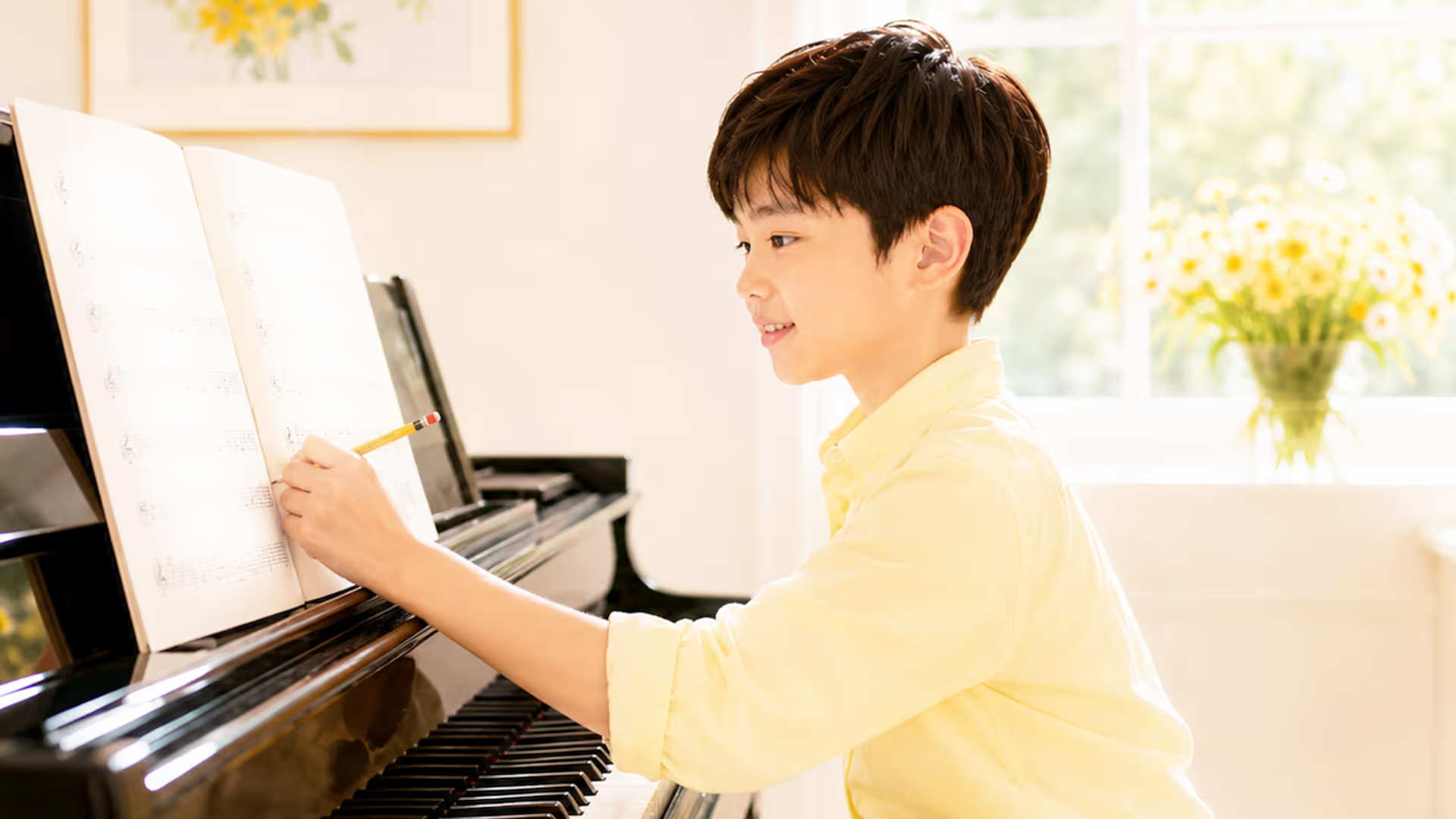
From an early age, music plays a critical role in brain development. Studies show that children who learn music develop stronger neural connections, improved memory, and enhanced cognitive abilities. By engaging multiple parts of the brain at once, music training helps children build the foundations for learning, communication, and problem-solving.
Research has shown that music training improves attention, memory, language, and executive function, the essential skills that help children succeed in school and beyond.

Enhances Brain Connectivity
Stronger Brain Connections
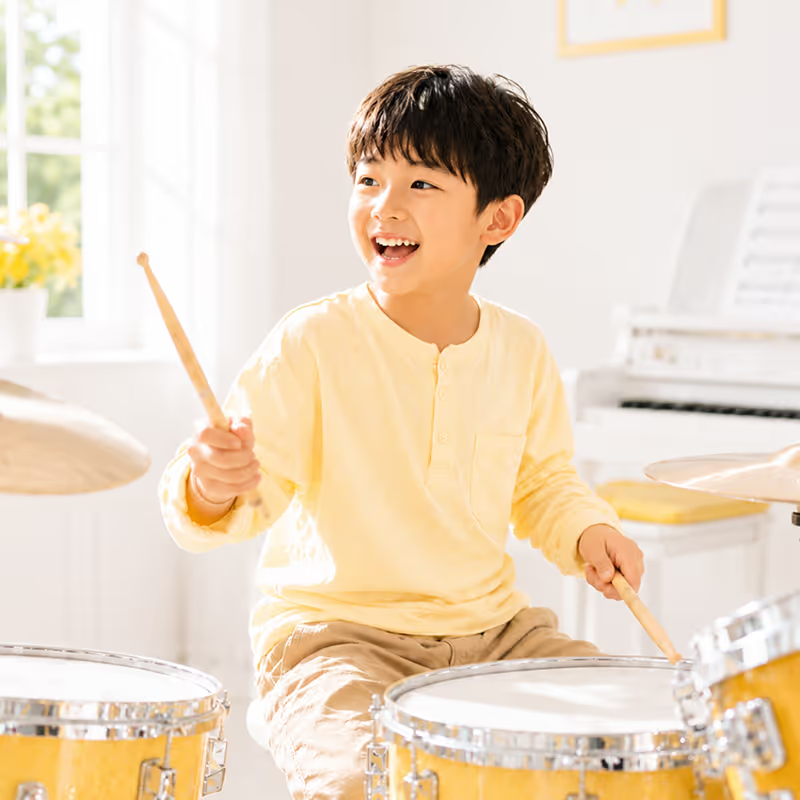
Music training helps different parts of a child’s brain communicate more effectively. Because learning music requires listening, movement, memory, timing, and coordination all at once, it strengthens the networks that connect these functions together. Over time, this can help children process information more efficiently, adapt more quickly, and think in a more integrated way.
Research has found that musical training is associated with stronger connectivity between brain regions, including pathways involved in coordination between the brain’s hemispheres. A review in The Neuroscientist described music-making as “a tool for promoting brain plasticity across the life span,” highlighting how music can shape both brain structure and function.
A longitudinal study from USC’s Brain and Creativity Institute concluded that music training “induces macro and microstructural brain changes in school-age children,” and that these changes were not simply due to pre-existing differences.
For parents, the key takeaway is simple: music does not just teach a child to play an instrument. It helps strengthen the brain systems that support learning, coordination, and flexible thinking.
Improves memory and attention
Learning music trains children to listen carefully, retain information, and respond with precision
By requiring children to listen, remember, and respond with precision, music training helps develop the attention and memory skills that support stronger learning and day-to-day performance.
Music lessons challenge children to concentrate, recall information, and respond in time, all of which strengthen focus and working memory. Research has shown that music training is associated with improvements in selective attention, working memory, and broader executive function in children.


Strengthens Language Development
Learning an instrument can help children strengthen the listening, speech, and communication skills that support overall development.
Music and language are built on many of the same foundations. Both rely on rhythm, sound discrimination, listening, pattern recognition, and the ability to process subtle changes in tone and timing. When children learn music, they are not only developing musical ability, they are also strengthening key skills that support speech, communication, and literacy.
Research has shown that music training can enhance auditory processing not only for music, but also for speech and language. A review in Nature Reviews Neuroscience highlighted how music training supports the development of auditory skills that transfer to language-related functions.
Research published in PNAS also found that a musical intervention in infants enhanced neural processing of temporal structure in both music and speech, suggesting that early musical engagement can help support the foundations of language development.
Boosts Neuroplasticity
Music helps the brain form and strengthen the connections children rely on for learning, communication, focus, and long-term development.
A child’s brain is especially adaptable in the early years, which means the experiences they engage in can have a lasting impact on how they learn and develop. Music is powerful because it does not just teach one isolated skill, it helps strengthen the pathways children use to listen, focus, communicate, and respond to the world around them.
Over time, this supports a stronger foundation for learning. As children learn music, they are constantly processing sound, recognising patterns, coordinating movement, and adapting in real time. That repeated process helps the brain become more efficient at learning, adjusting, and building new skills.
For parents, the takeaway is simple: music helps shape the underlying systems children use to learn, which is why its benefits can extend far beyond the lesson itself.

Related Articles
Musical intervention enhances infants’ neural processing of temporal structure in music and speech
PNAS research found a musical intervention in infants enhanced neural processing of timing in music and speech, supporting early language development.

A Longitudinal Study on Children's Music Training Experience and Academic Development
Music lessons build focus and memory by training children to listen, recall, and respond in time. Research links music training to attention executive function.
Music training for the development of auditory skills
Research shows music training enhances auditory processing for music and speech. A Nature Reviews Neuroscience review found it supports language-related skills.
Childhood Music Training Induces Change in Micro and Macroscopic Brain Structure: Results from a Longitudinal Study
A USC study found music training causes measurable brain changes in school-age children, supporting healthy development beyond pre-existing differences.
Music Making as a Tool for Promoting Brain Plasticity across the Life Span
Research shows musical training strengthens brain connectivity and coordination. Music-making promotes lifelong brain plasticity, shaping structure and function.
From Our Families
Hear it straight from our parents and students!